Ever Wondered What to Wear to an Interview? 10 Tips From an Expert


Confused as to what to wear to an interview? Or maybe you want to know what not to wear; either way, the outfit you choose is what creates that very first impression when you walk in for an interview.
We all hate to think it, but the way we dress and enter a room when we go to an interview can determine the outcome. There’s a lot more to it however, than just wearing the most tailored and stylish clothes you own; it’s all about how you carry yourself. One of the best tips? Choose your outfit based on what gives you confidence, but keep in mind the importance of maintaining a sophisticated, professional manner.
Of first impressions are determined by the way you dress in an interview
If you want to know what to wear to an interview or simply want to be more confident when you walk in; Annie Sophia, one of Australia’s leading Personal Branding Experts is here to help. With a successful career mentoring CEOs, professional businessmen and women, and leaders; she’s an expert on the impact your outfit can have on a recruiter. Here are her top tips for interview success.
In an interview, the recruiters first impression of you is made up of:
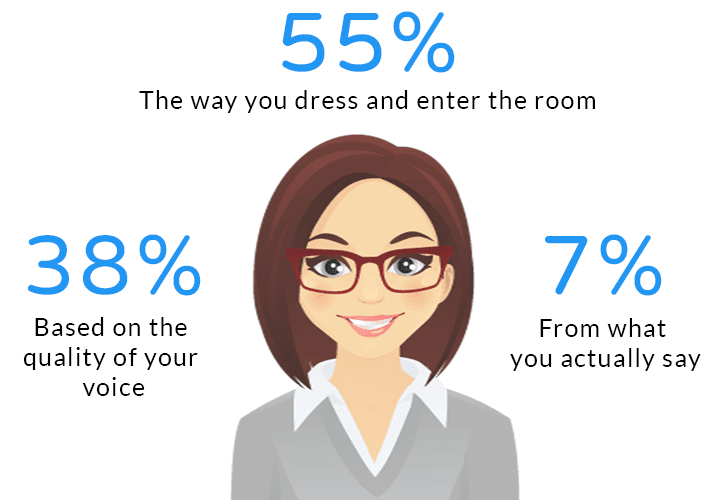
What you wear to an interview communicates who you are without having to speak.
It creates an image or perception of the type of person you are and whether we like it or not, research shows that the first impression of a person can be made within less than a second. Once these impressions are made; it can be difficult to reverse them, so the key is to make sure you walk into an interview giving off the image.
All the hours of possible questions and answers won’t matter if we walk in wearing something ill-planned or inappropriate.
Imagine being the interviewer and seeing two candidates walk in. One wearing a tight low cut top, heavily made-up and 5-inch stiletto heels, and the other wearing a blue blouse with blazer, lightly made up, and a pair of nude pumps. Which one would you hire?
Of course, different industries offer different dress codes, and it is imperative you do your research before deciding on your wardrobe.
However, there are some general outfit ‘dos and don’ts’ which are critical to interview success.
Of hiring managers say clothes are the deciding factor between similar candidates
Of first impressions are determined by the way you dress in an interview
Of hiring managers say they know if they’ll hire an applicant in the first 90 seconds
Annie’s Top Tips for What to Wear to an Interview
Do Your Research
Do your research on the company and its dress codes. Eg. the advertising industry could require a more ‘creative smart casual’ dress. Where as a financial institution could require a more ‘business professional’ dress
Don't Wear Anything Uncomfortable
An interview is stressful enough without worrying about how tight is the suit, or how to walk in heels
Wear Something That Makes You Feel Confident
Confidence is a feeling and by choosing an outfit you feel confident in you will instantly be perceived as confident which is extremely desirable to an interviewer and you will be well on your way to getting the job
Ask Your Friends and Family
Do have 2 or 3 possibilities and ask your friends or family. Often it is good to get other’s opinions as they bring their own experiences and insights into the mix. But warning – don’t get swayed into something you are not comfortable in.
Make Sure the Clothes Are Well-Presented
Do groom the clothes. Make sure they are dry cleaned, laundered, and pressed, they are fitted well (your local tailor is your friend) and they are temperate appropriate (dark wool suit in summer? Probably not)
Go Easy on the Accessories and Makeup
Less is more. You don’t want big statement earrings or necklaces to be a distraction. You are there to show your best self, not your bling. At the same time, there’s nothing worse than an overly made-up candidate. Not only does it distract from the interview but it also communicates the ‘got something to hide’ mentality.
Interview Outfits for Women
Still, need inspiration for interview outfits? Here are some timeless classics that can help your interview confidence. Annie’s best advice is to keep things sophisticated and respectful, even if the interview is a ‘casual catch up’. Don’t fall for this trap; you’re better being overdressed than underdressed at an interview after all!
Interview Outfit Ideas
- Neat black dress
- Pencil skirt and blouse
- Coloured sweater and skirt
- Blouse with tailored slacks
- Wide-leg trousers and shirt
- Tailored blazer and trousers
- High-waisted trousers and blouse
- Skirt and blazer combo
- Bright well-tailored dress
- Midi skirt and sweater
A survey found that people feel the most confident when wearing:
For Women
- High heels
- Well-tailored dress
- Designer perfume
For Men
- New suit
- Freshly shaved
- Aftershave
Colour Meanings: What Colour is the Best to Wear to an Interview?
Colour can make a big impact on the impression you make on a recruiter. It might seem surprising, but colour psychology plays a big part in the recruitment process. Some colours, such as navy and black, are associated with professionalism and business success. Red and blue are two of the most memorable colours, meaning even if you aren’t as qualified as other applicants in a job you applied for, these colours can help you stand out in the minds of recruiters. This is really important since every job application can bring in approximately 250 resumes! With so many applicants, standing out can be a major advantage.
At the same time, it’s best to avoid some colours. In a survey of over 2,000 recruiters, orange and brown were two of the worst, with black and navy the best among the hiring managers.
-
Black: Professionalism and Leadership
-
Grey: Logical and Analytical
-
Purple: Artistic and Insightful
-
Blue and Navy: Honest, Reliable, Strong
-
Green and Yellow: Creative and Innovative
-
Yellow: Cheerful and Fun
-
Red: Power, Confidence and Leadership
While every colour has a different meaning, your choice in an interview can be based on your industry, what you feel confident in and the type of message you want to give off.
What colours you choose to wear for an interview can determine the message you convey. And with such polarising views on certain colours, often it is best to stick with colours which have been proven to be ‘safe’. When it comes to what colour is the best to wear in an interview, it’s best to keep in mind the following:
- BLUE is universally the most loved colour in the world. Wearing blue is low risk and with so many shades of blue to choose from – including navy, light or cobalt, you are more likely to make a good impression wearing this colour.
- BLACK, WHITE and GREY are always safe choices. To keep things interesting, look at different variations such as beige or gun-metal grey.
- GREEN, YELLOW, ORANGE & PURPLE are seen as more ‘creative’. Enjoy wearing these colours for creative industry roles.
Still, struggling with the whole interview thing? Click here for more career advice.

Latest Articles

As one of Australia's most important industries, the agriculture industry offers great career opportunities. Read our career guide and get started today.

Want to read more?
Before study it’s important to think about what type of counselling job is best for you. We’ve looked at five types of counselling jobs for you to consider!
In an aged care career, you can empower yourself by empowering the older people in your community. Discover how you can get started with no experience.
Want to know what it takes to become a lash technician? Learn more about what lash technicians do, and the necessary skills, qualifications and experience.
