The Ultimate Guide to Becoming a Professional Photographer

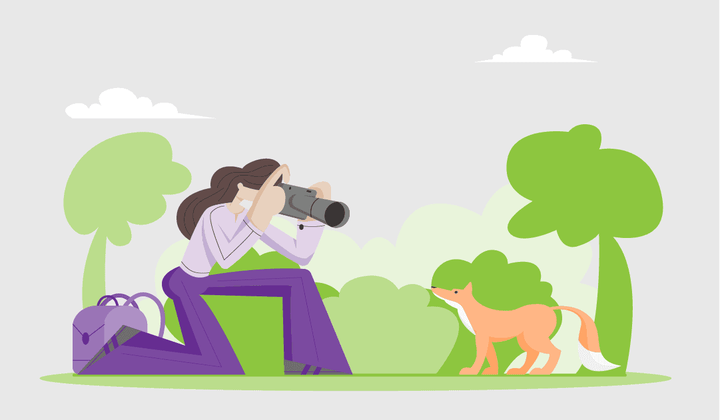
Do you dream of launching a career as a photographer? Breaking into the photography industry involves more than an eye for lighting and composition. It also involves concrete marketing and business skills.

Getting Started
Once you’ve realised that you have a passion for photography, how do you transform this into a career? Well, becoming a professional or successful photographer isn’t something that happens overnight. Very few photographers, especially the ones that love shooting landscapes get ‘a start’ per say. Instead, it’s a slow process and one of constant work over several years.
It is helpful to visualize your end goals as you begin. Ask questions such as what type of photographer do you want to become, and how do you plan to get there? It’s important to keep in mind what your end goal is, then figure out the steps you need to take to get there. This could be a case of traveling, taking lots of photos, marketing yourself, and building a following.
Photography Industry Statistics
Average Salary for Freelance Photographers in Australia
People Employed as Photographers in Australia (2019)
Full-time Worker Share
Learn the Skills of the Trade
While many may think that travel and landscape photography is a glamorous business, the daily reality of it involves much more than taking photographs in exotic locales.
Skills that come into play include web design, marketing, and product design. If you look at the typical workday of any photographer the reality is that little time is spent on taking photographs. Most of it is spent on other business-related tasks including administration, accounting, planning and marketing.
Courses in photography will not only teach you the art of taking great photos, but you can choose how far you want to take the subject. Some people would like to keep their day jobs but become freelance photographers. Others take it more seriously and want to turn it into a career. Some of the Photography courses in Australia will teach you subjects such as small business management, networking skills, marketing skills and also teach you to take stills or action photos or wildlife photography skills. For each phototype, Australia offers the milieu for each: Sydney harbour for stills, the Melbourne Cricket Club for action photos, and the Adelaide Zoo for wildlife photography.
Specialised Photography Courses
For the serious photographer, there are courses that allow you to specialise in black and white wedding photography or high-tech digital SLR photography. If you like to take special pictures of close-up items like leaves or water drops or insects, courses for this type of photography – referred to as macro photography – are available to you.
Combination courses are also available, for example, a combination of travel writing and digital photography that can turn you into a travel writer as you travel Australia from the Gold Coast to Canberra to Perth.
Both online, as well as school class photography courses in Australia, cover some of the most technical aspects of photography. These courses will include technique, as well as lighting, composition, and photo development. You will be able to take perfect pictures of sunrise or sunset or in the rain and after that you will be able to develop the pictures you have taken. If you have used a digital camera, you will also learn to make aesthetic changes.
If you want a diploma in digital photography or a degree in fine arts that consists largely of photography courses, you can study photography at university or specialist art schools in Australia.


Marketing and Promotion
So why is marketing so important for photographers? Learning business skills alongside technical skills can help budding photographers with self-promotion. When asked how photographers can best promote their work, Lee Duguid, an influential Australian-based photographer, gives the following advice:
Types of Photography Careers and Specialisations
When most people think of a career in photography, they immediately imagine things like fashion, wildlife, sports and weddings. But that’s not the whole picture.
In fact, there is a whole range of weird and wonderful jobs a photographer can do including a couple you may never have thought of. Here are 5 more obscure ones:
Unit Still Photographer
Have you ever wondered who takes the photos on set for your favourite TV show or movie? Whether it’s promotional pictures, behind the scenes shots, or photos to be used as onset props, someone has to take them and if you like the idea of show business, it could be you.
A still photographer has many hats on set. While their main responsibility is to capture images to be used in marketing and publicity, they are also sometimes expected to take set stills to help with continuity and scene matching, or photo props such as a family portrait, driver’s licence photo or crime scene shot to be used on camera.
While quite a glamorous-sounding job, still photography is also infamous for its tough working conditions. Apart from working long hours in often challenging and distant locations, a still photographer must work hard to develop good relationships with the cast and crew and be as silent and invisible as possible onset.
Underwater Photographer
If being under the sea is your thing, you may want to consider a career in underwater photography.
Most underwater photographers work with dive schools and centers taking souvenir photos of other divers. To do this you can either be employed by the dive center or can offer your services as a freelancer, selling photos directly to clients.
Other career options for underwater photographers include marine photography for wildlife magazines or underwater fashion shoots for magazines and advertising agencies.
Aerial Photographer
For aerial photographers, it’s all about the bird’s eye view, snapping photos of landscapes from a plane, helicopter, or even satellite. So if you’re not afraid of heights and enjoy looking down on things from above, this could be the job for you.
As an aerial photographer, you can work either artistically or commercially. For example, you could work freelance selling your work to book publishers, travel magazines, and even galleries. Or you could be employed by an organisation such as a government agency, a large real estate developer, or a cartography or land surveying company.
Macro Photographer
If you like to get up close and personal with tiny, hard-to-see objects and spend hours scrutinising the smallest details of everything around you, you may make a great macro photographer.
Macro photography is a type of photography that allows us to get an extreme close-up view of really small things such as insects, flowers, snowflakes, hair shafts, and food particles.
Macro photographers generally work as freelancers taking shots of interesting things to sell to science journals, wildlife magazines, and stock photography.
Pet Photographer
Do you love animals? If so, you may like to combine this with your passion in photography to snaps portraits of people’s pets. In fact, you may be surprised how many people want professional shots of their furry friends and are happy to pay a premium price for them.
Pet photographers work for themselves offering a range of services to private clients. Some common jobs include photo shoots in a studio or client’s home, dog shows, or pet adoption events.
Some pet photographers also specialise in equine photography, taking photos at horse shows, races, and equestrian centers.
Photography is a field that demands passion and a love of the world around you. It’s not necessarily a career you go into for the money, but a decision to pursue something that will fulfill you as few other occupations would.
With so many different branches of photography to specialise in, you’ll quickly find your niche and specialise in the thing that peaks your interest. If you’re after a career where no two days are the same, and creativity is limitless, step into this exciting field and discover your potential.
Browse Results









Latest Articles

Want to read more?
As more male childcare workers join the industry its a great time to start your fulfilling career as a male childcare worker! Read more to find out how.

There's a lot more to science careers than PhD's, so don't let this stop you pursuing a STEM career in this area. Learn how you can be a part of the action.

Considering heading into the fitness industry? The good news is it can be exciting, flexible and financially rewarding with plenty of opportunities.

